Design Learning Experiences, Not Just Training Slides
Visual Learning Architecture™ is the intentional design of visual learning environments that improve engagement, understanding, recall and workplace application.
It moves beyond slide design to focus on how learners experience, process and apply learning.
What Is Visual Learning Architecture™?
Visual Learning Architecture™ is the framework used to structure learning experiences through visual design, learner interaction and workplace relevance.
Rather than asking
What slide comes next?
Visual Learning Architecture™ asks:
What does the learner need next?
The result is learning that is more engaging, memorable and practical.
Why It Matters
Many training programmes focus on delivering information.
Visual Learning Architecture™ focuses on creating experiences that help learners:
Understand concepts more quickly
Stay engaged
Recall information more easily
Apply learning in the workplace
Participate in discussions and decision-making
The Building Blocks Of Visual Learning Architecture™
Better Workplace Application
Learning becomes more memorable and meaningful.
Reflection & Discussion
Encourage learners to think, share and apply ideas
Visual Learning Architecture™ In Action
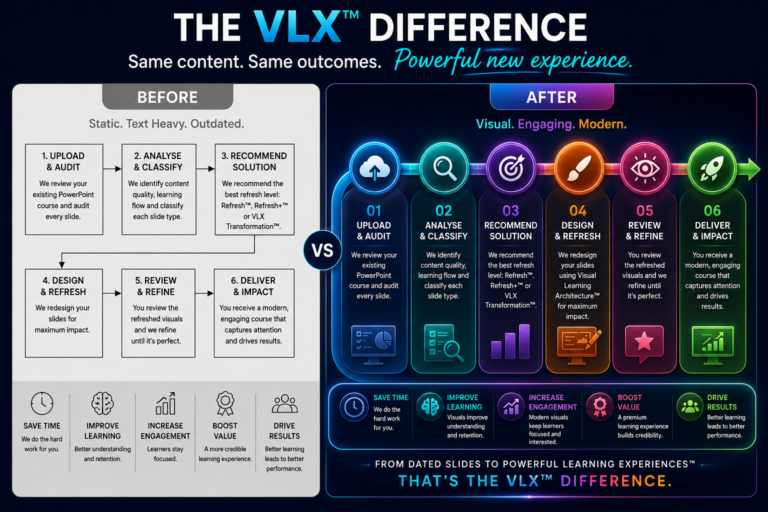
Visual Learning Architecture™ transforms information delivery into learner engagement, discussion and workplace application.
Beyond PowerPoint
Visual Learning Architecture™ is not about making slides look better.
It is about designing learning experiences that:
Guide learners
Encourage participation
Support reflection
Improve recall
Strengthen workplace application
Slides become one component of a larger learning experience.
Benefits For Learners
Better Engagement
Learning feels more interactive and meaningful
Better Recall
Visual structures support memory and understanding.
Better Application
Learning is easier to transfer into workplace practice.
Better Experience
Training feels modern, professional and purposeful.
Benefits For Trainers
Better Discussions
Learners engage more actively
Easier Delivery
Visual structure supports facilitation.
More Professional Learning Environments
Visual consistency improves the overall experience.
Greater Learning Impact
Focus moves from content delivery to learner outcomes.
How It Fits Within The TMD Learning System™
Visual Learning Architecture™ acts as the design framework that connects:
Visual Learning Architecture™ In Practice
Visual Learning Architecture™ is not about making slides look better.
It is about intentionally designing learning experiences that help learners understand, remember and apply information.
This includes:
Visual structure and flow
Learner interaction
Reflection and discussion
Workplace relevance
Consistent learning experiences
Meaningful visual learning graphics
When these elements work together, learning becomes easier to follow, easier to remember and more likely to be applied in the workplace.
Safety Detective™
Observation & judgement
Together these elements create engaging and memorable learning experiences
Great Learning Doesn’t Happen By Accident
Visual Learning Architecture™ helps transform information into meaningful learning experiences that learners remember, apply and use.