
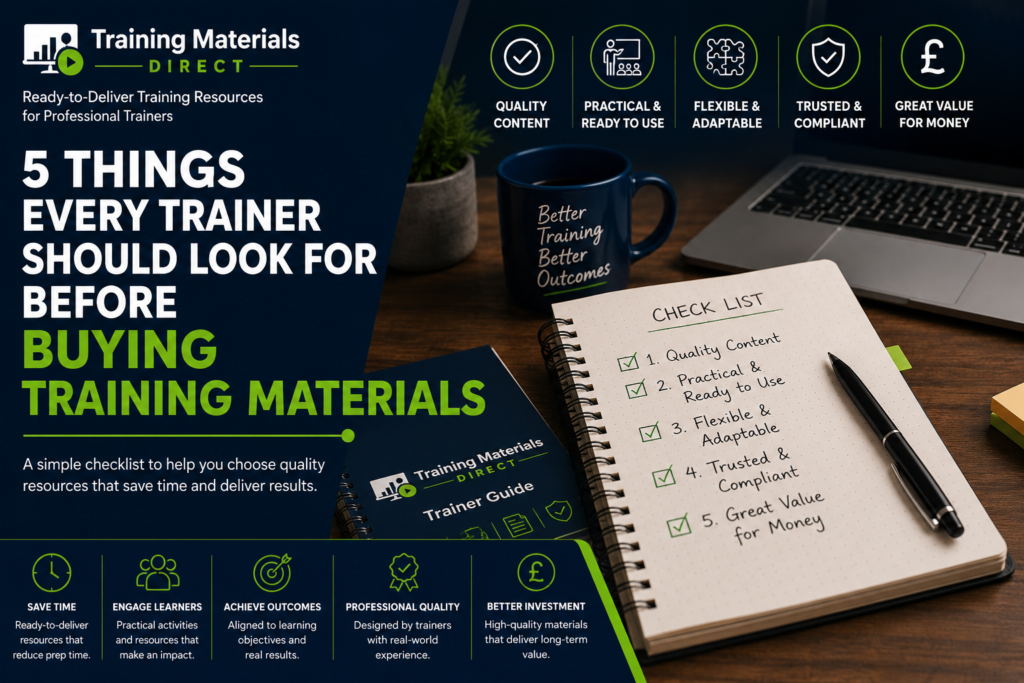
5 Things Every Trainer Should Look For Before Buying Training Materials
1. Accuracy and Relevance
The first question to ask is whether the content is accurate, current and relevant to your learners.
Training materials should reflect current legislation, guidance, industry standards and best practice where appropriate. Outdated information can damage credibility and create confusion for learners.
Before purchasing, consider:
- Does it reflect current workplace practices?
- Is the content up to date?
- Is it suitable for the intended audience?
- Does it align with recognised standards or qualifications?
Quality training materials should provide confidence that the information being delivered is accurate and reliable.
2. Trainer-Friendly Design
Many resources look impressive but are difficult to deliver.
Effective training materials should be designed with the trainer in mind. Slides should be clear, easy to follow and focused on supporting learning rather than overwhelming learners with information.
Look for resources that include:
- Clear structure and progression
- Professional design
- Consistent formatting
- Easy-to-follow content
- Opportunities for learner interaction
Remember, a presentation should support the trainer, not replace them.
3. Activities and Learner Engagement
Learning is most effective when learners actively participate.
A training resource pack should include activities that encourage discussion, reflection and practical application rather than relying solely on presentation slides.
Consider whether the materials include:
- Group discussions
- Scenarios and case studies
- Knowledge checks
- Practical exercises
- Reflection activities
These elements help transform information into meaningful learning experiences.
Supporting Resources
One of the biggest differences between basic training materials and professional training resources is the availability of supporting documentation.
A slide deck alone rarely provides everything a trainer needs.
Look for materials that include:
- Trainer guides
- Learner workbooks
- Session plans
- Assessment materials
- Handouts and supporting documents
The more complete the resource package, the less time you will spend creating additional materials yourself.
5. Editable and Adaptable Content
No two training sessions are exactly the same.
Different organisations, learners and delivery methods often require minor adjustments to training materials.
For this reason, resources should be fully editable and easy to customise.
This allows trainers to:
- Add organisational branding
- Adapt examples and scenarios
- Update content when required
- Tailor activities to specific audiences
What Really Matters?
When evaluating training materials, it is easy to focus on the number of slides or the size of the resource pack.
However, quantity does not always equal quality.
The most valuable resources are those that save preparation time, support effective delivery and help trainers create engaging learning experiences.
A well-designed training package should allow trainers to focus on their learners rather than spending hours rewriting content.
Final Thoughts
Training materials should be an investment, not another task on your to-do list.
Before purchasing any training resource, take the time to consider the quality, completeness and usability of the materials being offered.
The right resources can save hours of preparation time, improve learner engagement and increase trainer confidence.
And ultimately, that allows trainers to focus on what they do best: delivering great learning experiences.
What To Look For In Quality Training Materials
✓ Clear learning outcomes
✓ Engaging activities
✓ Trainer guidance
✓ Learner resources
✓ Assessment opportunities
✓ Editable formats
Key Takeaways
✓ Good resources save preparation time
✓ Effective materials improve learner engagement
✓ Trainer guidance is essential
✓ Resources should support classroom and online delivery
✓ Quality materials improve confidence and outcomes
Join The Launch List
Be the first to hear when new training resource packs become available.